





The Detail Taking Over Every Ceremony This Season
Wedding season 2026 has produced no shortage of strong looks – Taylor Swift and Dua Lipa alone have kept red carpets and garden venues busy – but the sharpest styling choice showing up across guest photos isn’t about color or silhouette. It’s about fringe.

From Micro Minis to Maxi Tiers, There’s No Single Way to Do This
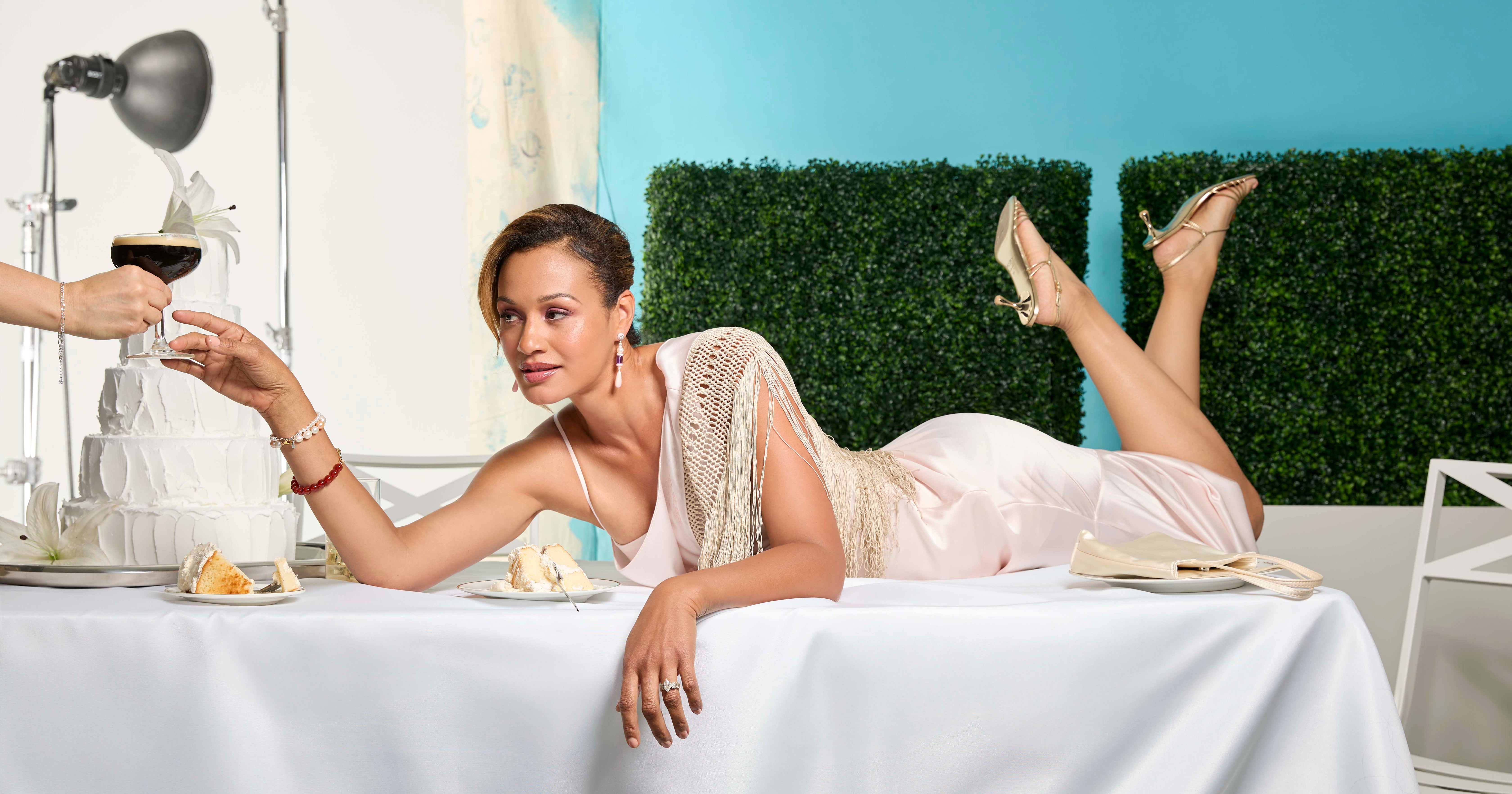
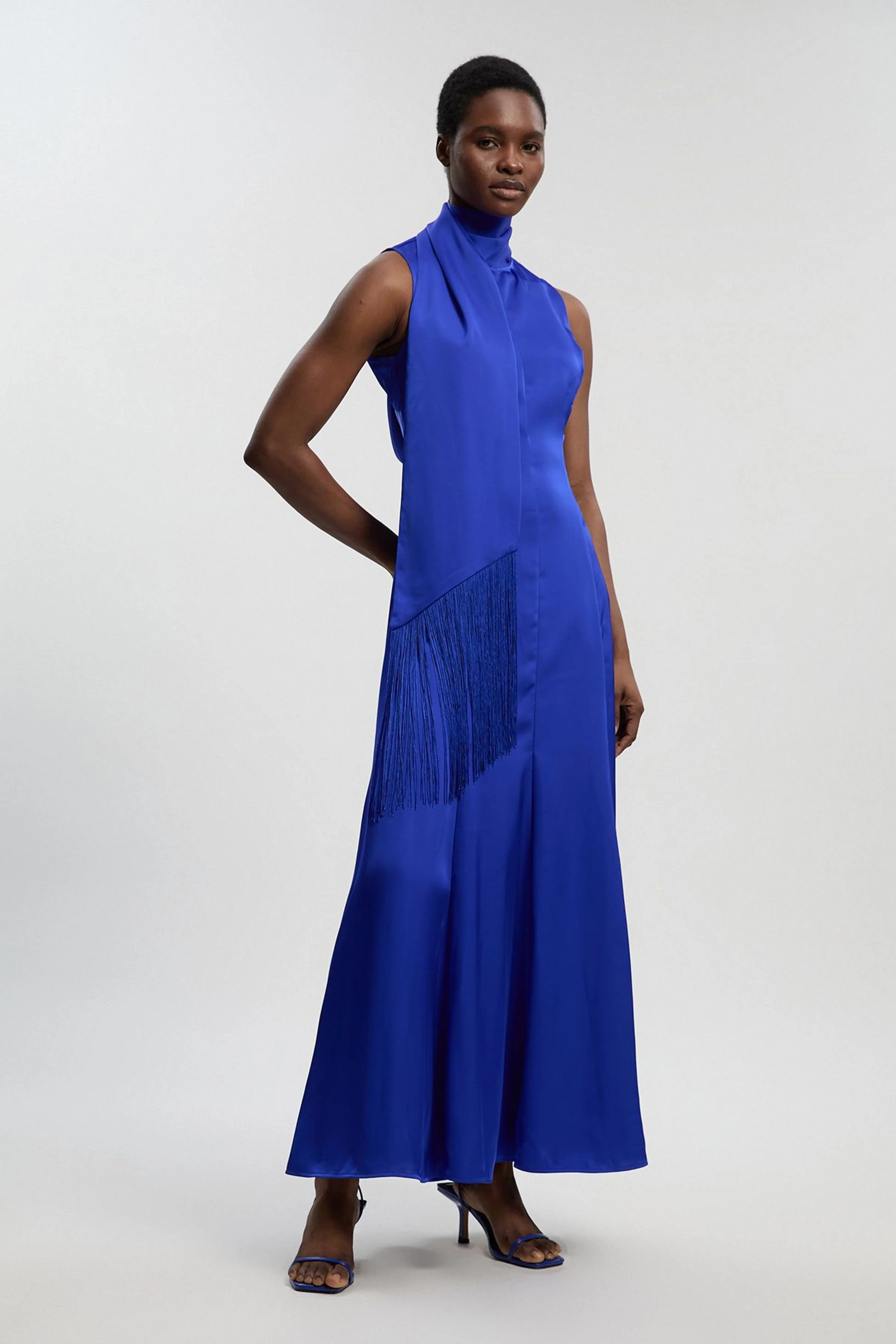
Fringe has always had a reputation for leaning either too bohemian or too costume-y, which is probably why it kept getting left off the “safe” wedding guest shortlist. What’s shifted is how designers are deploying it now – not as a statement in itself, but as a finishing layer that does the work other embellishments used to do. A fringe hem on a micro mini adds enough coverage to keep the look polished without flattening the energy. On a maxi, fringe broken into tiered sections creates a mélange of textured ruffles that move with the body rather than sitting stiffly at the ankle.
Zendaya made the case cleanly this summer at the Spider-Man: Brand New Day photocall in Madrid on June 15, 2026, wearing a Christian Cowan LBD with fringe detail that pulled focus at a Four Seasons Hotel event already packed with competition. It wasn’t a maximalist moment – the fringe did exactly what a good accent should do: it gave a simple silhouette somewhere to go.
Dakota Johnson went in a different direction at the 78th annual Cannes Film Festival on May 19, 2025, stepping onto the Highest 2 Lowest red carpet in a bubblegum pink Gucci piece that put the trend in entirely different tonal territory. Where Zendaya’s look worked through restraint, Johnson’s leaned into softness – the pink and the fringe together creating something that read more romantic than retro.
Between those two poles – minimalist black and blush-toned Gucci – there’s a wide range of interpretations available, which is part of why fringe is showing up so consistently. It doesn’t belong to one aesthetic category. Street style attendees have already started repurposing fringe scarves as belts, wrapping them around the waist of an otherwise plain dress to introduce texture without committing to a fully fringed garment. It’s a workaround that stretches a single accessory across multiple outfits, and it’s arguably the most adaptable approach to the whole trend.

The Lookbook Moment That Anchored the Trend
ThirdFloor’s Summer 2026 Lookbook – photographed by Nigel Barker with Miss J handling Creative vision – put the fringe look in direct context. Model Mercedes Yvette Scelba-Shorte wore a silky dress layered with a fringe sash, styled specifically as a best-dressed-guest scenario. The choice to isolate the sash rather than go full fringe was deliberate: it kept the dress itself clean while letting the fringe introduce movement and dimension at the waist, the exact zone that determines whether a formal look reads as interesting or invisible in a sea of similarly dressed guests.
That styling decision reflects something worth paying attention to. The most wearable version of this trend isn’t necessarily the most maximalist one. A fringe sash, a fringed belt, or a dress with a single fringe tier at the hem gives you the visual payoff without requiring the kind of confidence – or event context – that head-to-toe tinsel demands. For a beach ceremony or garden nuptial where the dress code is somewhere between cocktail and casual, the partial fringe approach keeps things appropriate without disappearing into the crowd.
Retailers have responded accordingly. Net-A-Porter is running a luxe edit of tasseled designs, leaning into the dressier end of the spectrum. Nordstrom’s offering is broader, with options across price points and formality levels – which means the trend is no longer gated behind designer price tags. When a styling detail moves from Gucci to Nordstrom’s wide-range inventory within the same season, it’s usually a sign that it has enough mainstream appetite to outlast the summer.
The fringe scarf-as-belt move in particular has legs beyond wedding season. Styled over tailored trousers or layered on top of a slip dress for a dinner setting, it functions as a standalone accessory that doesn’t require the occasion to be formal. The women pulling this off at street style events aren’t treating it as a costume choice – they’re treating it as punctuation, the way a good belt or a statement shoe used to function before those categories became oversaturated.
What makes the current wave of fringe different from earlier revivals is that it’s not anchored to a single decade’s reference point. The 1920s, the 1970s, and early-2000s boho have all claimed fringe at various points, but right now the detail is being used without much period signaling attached. A Christian Cowan LBD with fringe reads as contemporary, not vintage. A pink Gucci piece with fringe reads as feminine, not retro. The styling context has stripped the nostalgia out of it.

What to Actually Look For When Shopping the Trend
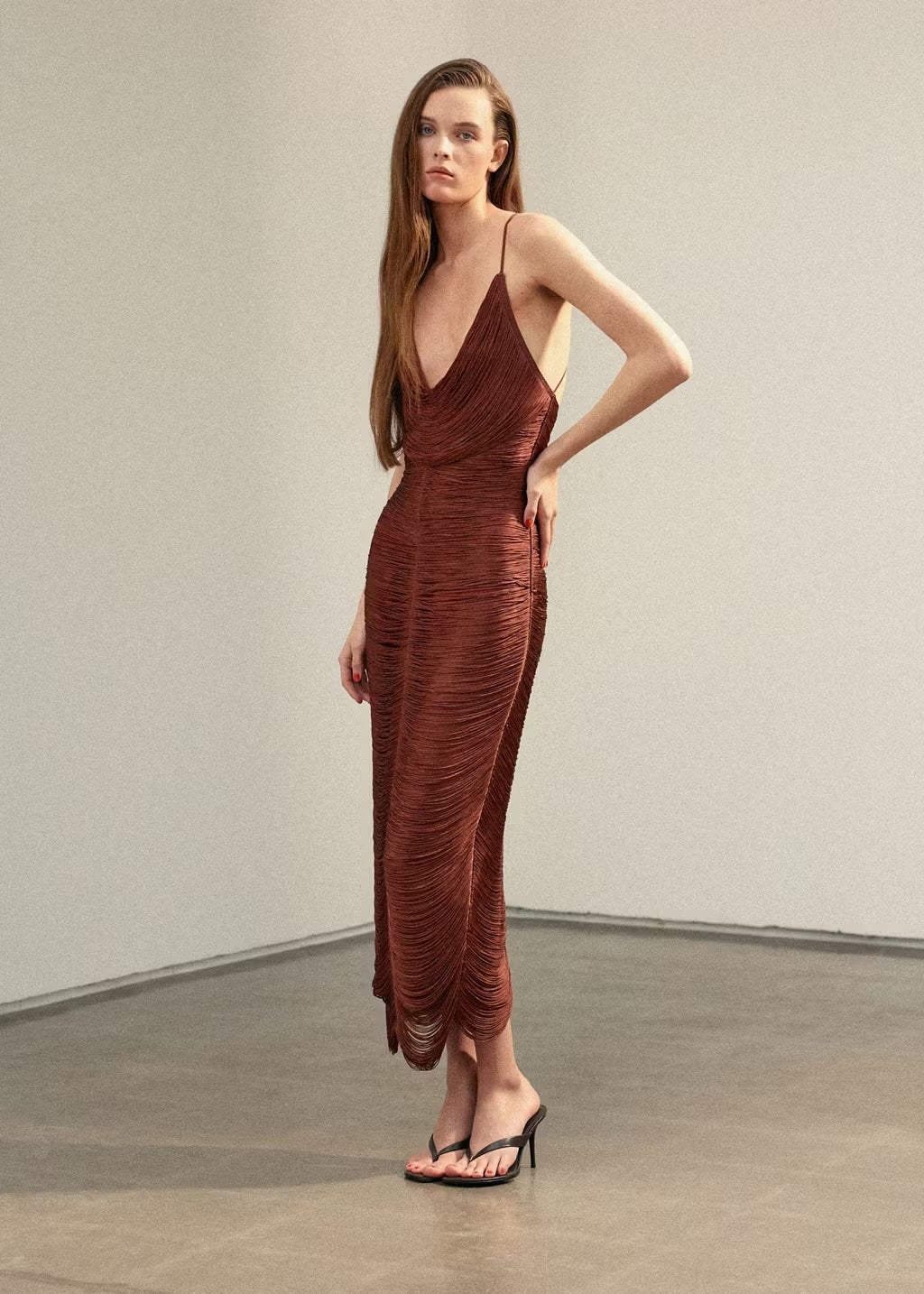
If you’re shopping for a specific event, the tiered fringe maxi is the safest entry point – it works across venues, photographs well, and doesn’t require the same nerve as a mini. For something more flexible that crosses multiple events or settings, a fringe sash or scarf worn as a belt gives you the detail without the commitment, and it can be added to pieces already in your wardrobe rather than requiring a full new purchase.
Nordstrom’s current inventory covers both ends, and Net-A-Porter’s tasseled edit skews toward occasions where the dress needs to do more architectural work. The question worth asking before buying isn’t whether fringe is “in” – it clearly is – but whether the specific garment will still feel right when the wedding photos resurface in three years and everyone is scrutinizing what the guests wore.