




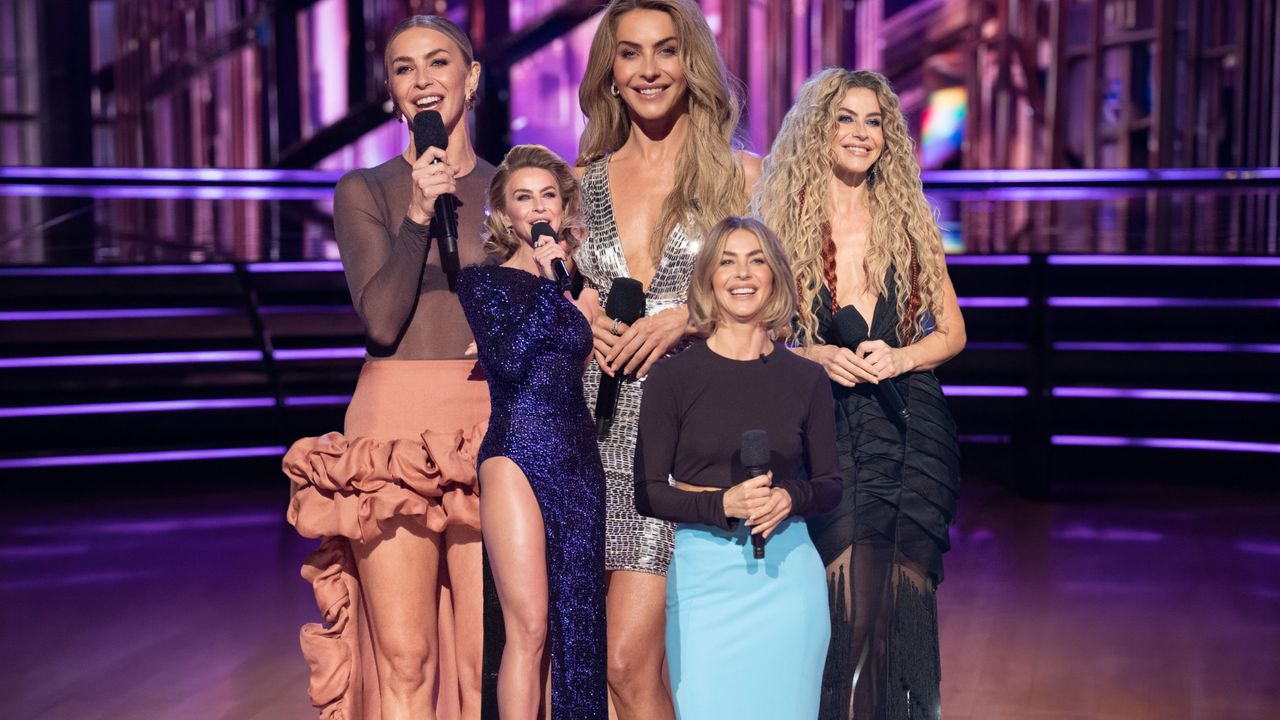
Julianne Hough has noticed that people are talking about what she wears on Dancing with the Stars, and she has no plans to tone it down.
The Problem With Playing It Safe
A cohost on a live dance competition occupies an odd spot in the frame. The contestants arrive in sequins, feathers, and rhinestones engineered to catch every light in the ballroom. The person holding the microphone has to look polished without competing with the people actually dancing. For many hosts the answer is a tidy palette of beige, ivory, and soft gray: expensive, inoffensive, and easy to forget by the next commercial break.
Hough started out in that register. Her early look as cohost leaned on safe neutrals, the kind of wardrobe that says “professional” and little else. Nothing about it was wrong. It just didn’t match the person wearing it, a dancer who spent years under those same ballroom lights and knows exactly how clothing behaves in motion and under a camera.
The turn came with stylist Brad Goreski, who helped her move past that comfort zone. The change was not a matter of adding sparkle to the same silhouettes. It meant a different set of references, with names like Haider Ackermann and archival Cavalli entering a weekly TV wardrobe where cautious basics once ruled.
That shift is the reason her outfits have become a conversation of their own. A neutral dress is invisible by design. A look with a clear point of view invites commentary, whether admiring, puzzled, or both, and Hough appears to understand that trade and accept it.
Ackermann, Cavalli, and the Case for a Louder Closet
The designers Goreski reached for say a lot about the direction. Haider Ackermann is known for fluid tailoring and rich, saturated color, clothes that move like they have somewhere to be. For a woman whose first language is movement, that is a natural fit. His work looks as good in motion as it does standing still, which matters on a show built around bodies in motion.
Cavalli pulls the other way. The house built its name on flamboyant glamour, and the word “archival” matters here. Archival pieces come from past collections, not the current season’s rack. Wearing them signals that someone did homework, went looking, and wanted something with a history instead of a press-release outfit anyone could borrow next week. On television, where much of what hosts wear is new and sample-sized, a vintage-minded choice stands out quickly.
Together the two names sketch a range. One is restrained, architectural, and quietly sensual. The other is loud and unapologetic. A wardrobe that can hold both has room to surprise, and that is the point of what Hough and Goreski have described as a new “leading lady era.”
The phrase is worth taking at face value. A leading lady does not wait at the edge of the scene while others take the spotlight. She walks in expecting to be looked at and dressed accordingly. For a cohost, a job that can slide into the role of polite traffic director, claiming that language is a small act of repositioning. It says the host is part of the show’s visual story, not just the person who announces scores and introduces commercial breaks.
There is also a practical truth underneath the fashion talk. Dressing well for weekly live television is a grind of fittings, borrowed pieces, tight schedules, and outfits that must survive hours under hot lights. Turning that routine into something with ambition, with designers chosen for what they say rather than what is easy to obtain, takes a stylist who is willing to push and a client who is willing to be pushed.
Being Looked At on Purpose
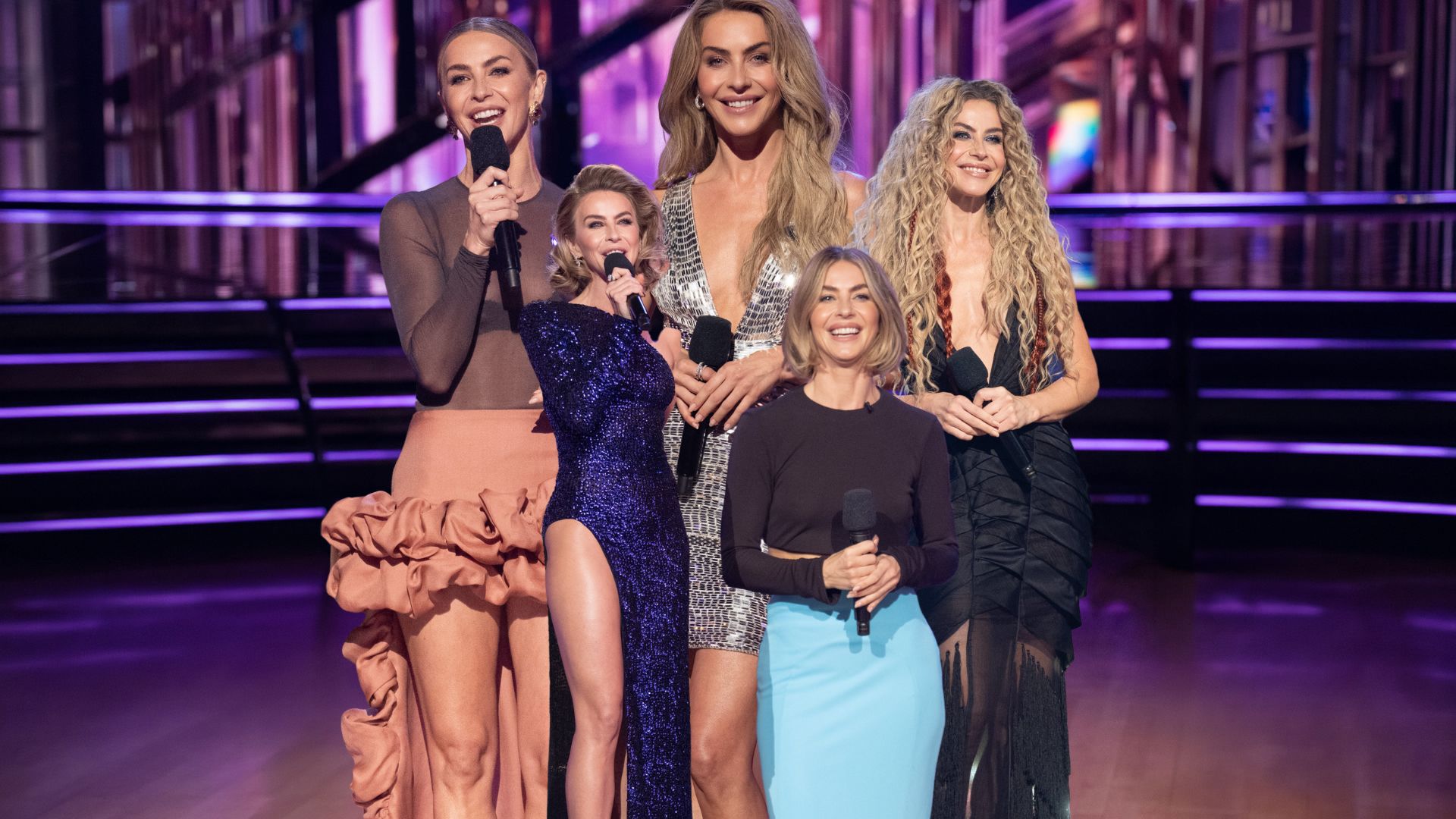
Hough’s awareness of the chatter is part of what makes the story interesting. Plenty of public figures claim they never read the commentary about their clothes. Her position is more direct: she knows people are discussing the looks, and the looks keep coming. That is not defiance so much as confidence, and it suggests the wardrobe is a deliberate choice instead of a series of accidents.
The larger question is where a “leading lady era” goes once the novelty settles. Ackermann and archival Cavalli set a high bar, and a weekly show leaves little room to coast. Each new episode asks for another outfit that earns the conversation the previous one started, and viewers will keep watching to see whether the next one lands.

For now, the neutrals are in the past. What walks out next week is anyone’s guess.